Most anti-stigma campaigns try to empower victims to stand up and fight for acceptance. But the stigma of mental illness carries a profound taboo, so people hide it away. Instead of asking the 1 in 5 who live with a mental health issue to stand up for themselves, we asked the 4 in 5 to say, “I will listen.”

Mental health is misunderstood, stigmatized, and can lead to tragedy. One of the most powerful actions we can take is letting the people in our life know we are here for them, without judgement.
Case Video: #IWillListen turned the largest social network, FaceBook, into the world’s biggest support network.
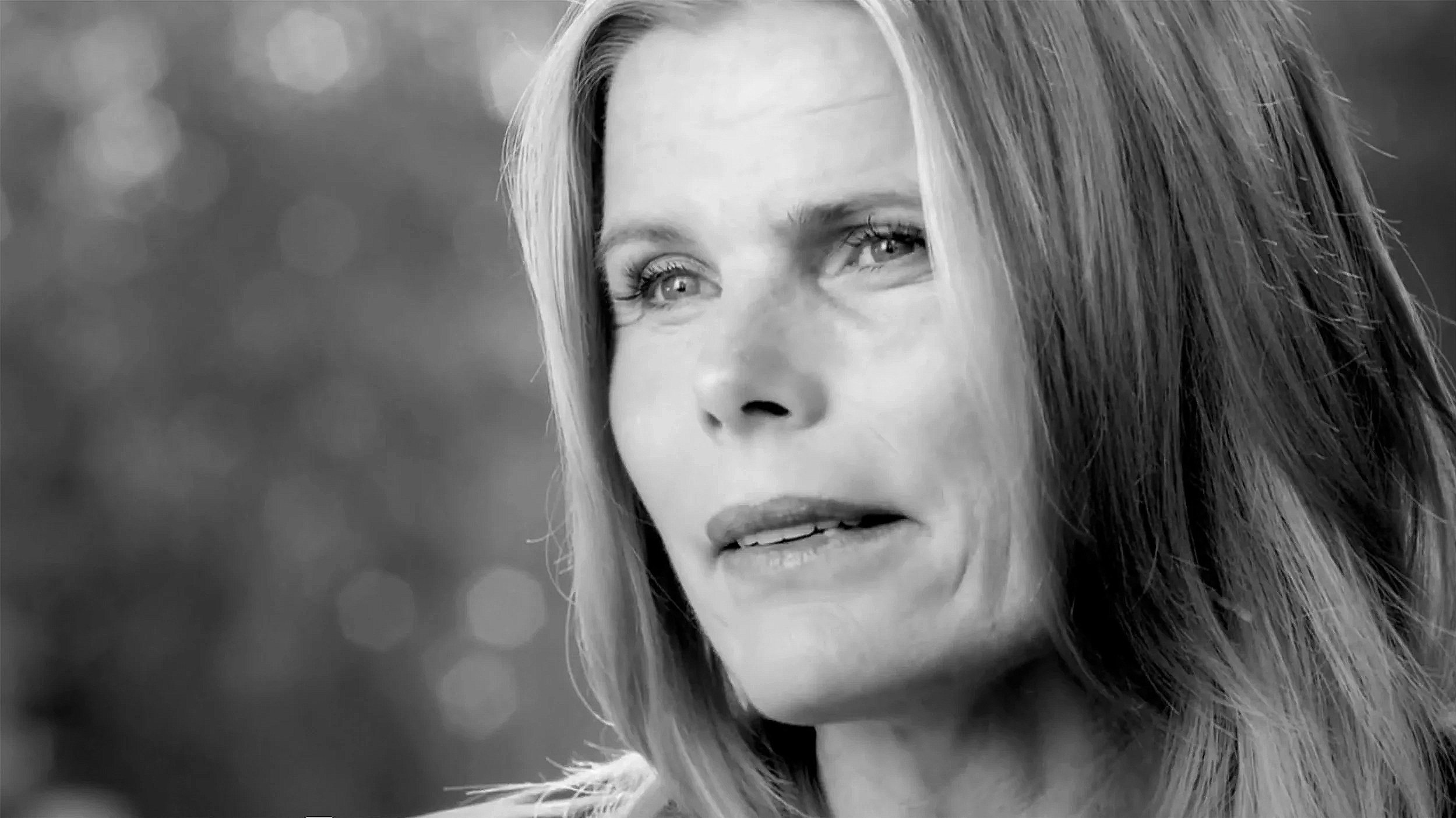
Mariel Hemmingway suffered the tragic loss of her sister. Her participation in #IWillListen was a powerful example.
PSAs and pre-roll made the stigma surrounding mental illness visceral. It modeled how anyone could participate and promise to listen.
The campaign inspired 34,000 Facebook posts, and thousands on other platforms, increasing NAMI’s free peer-to-peer counseling group attendance by 400%.
#IWillListen trended at #4 on Twitter, inspired student rallies at a dozen universities, and was supported by the New York City and Philadelphia mayors who created I Will Listen Day by proclamation and hosted I Will Listen Day events.
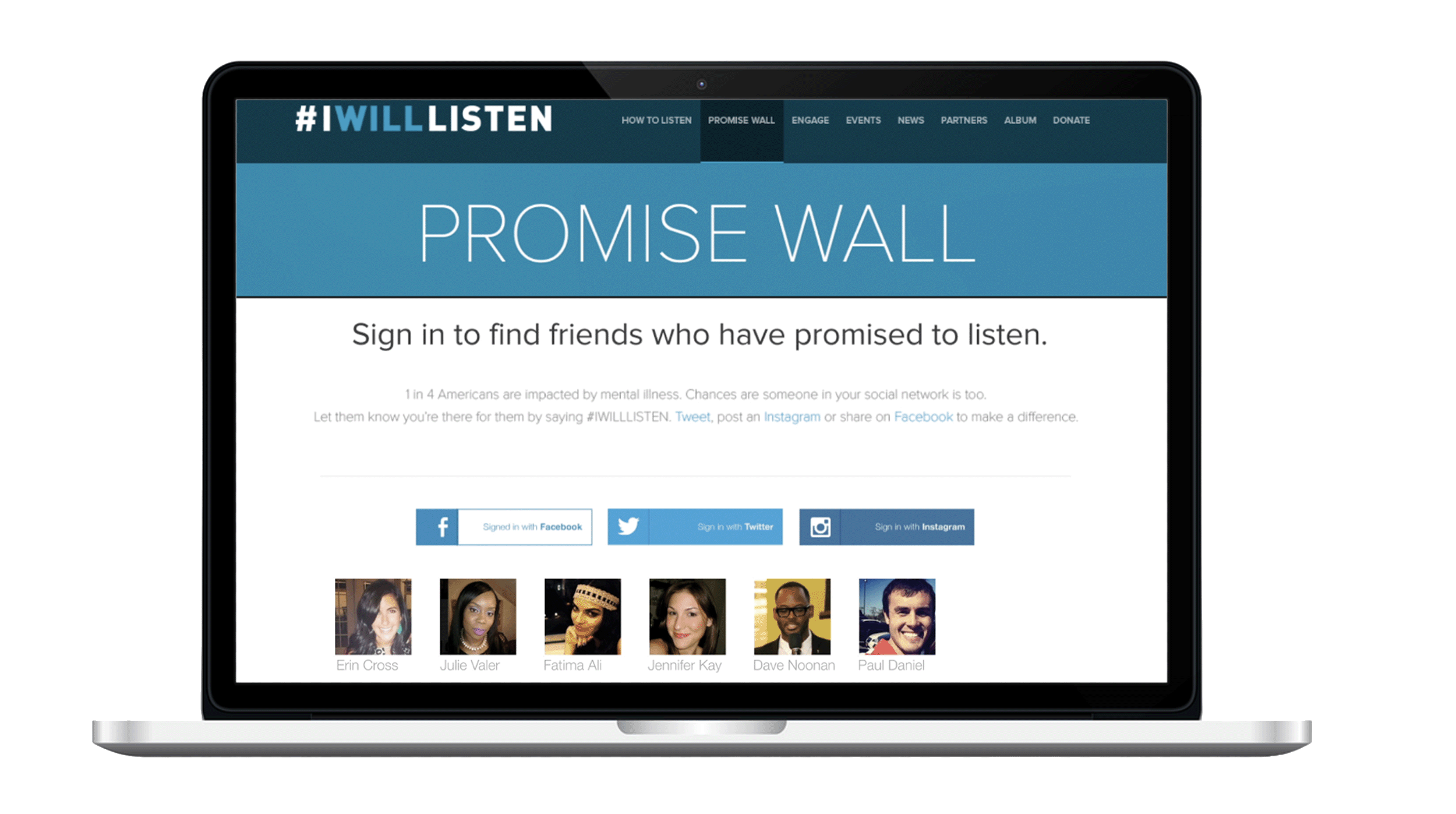
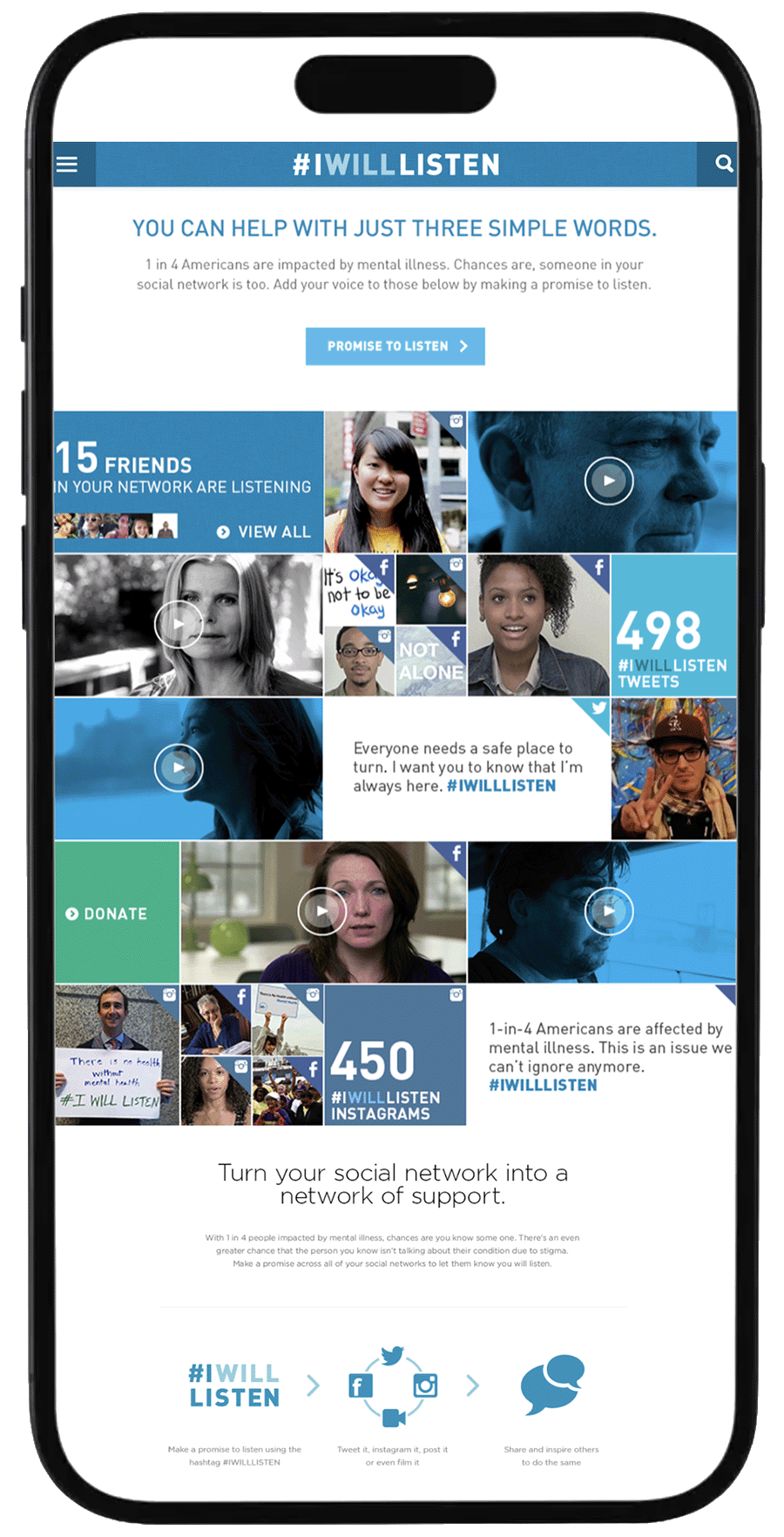
The stigma of mental illness prevents people from getting help. We asked people to post messages of acceptance so friends will know who to turn to for support. Three words broke the stigma: I Will Listen.
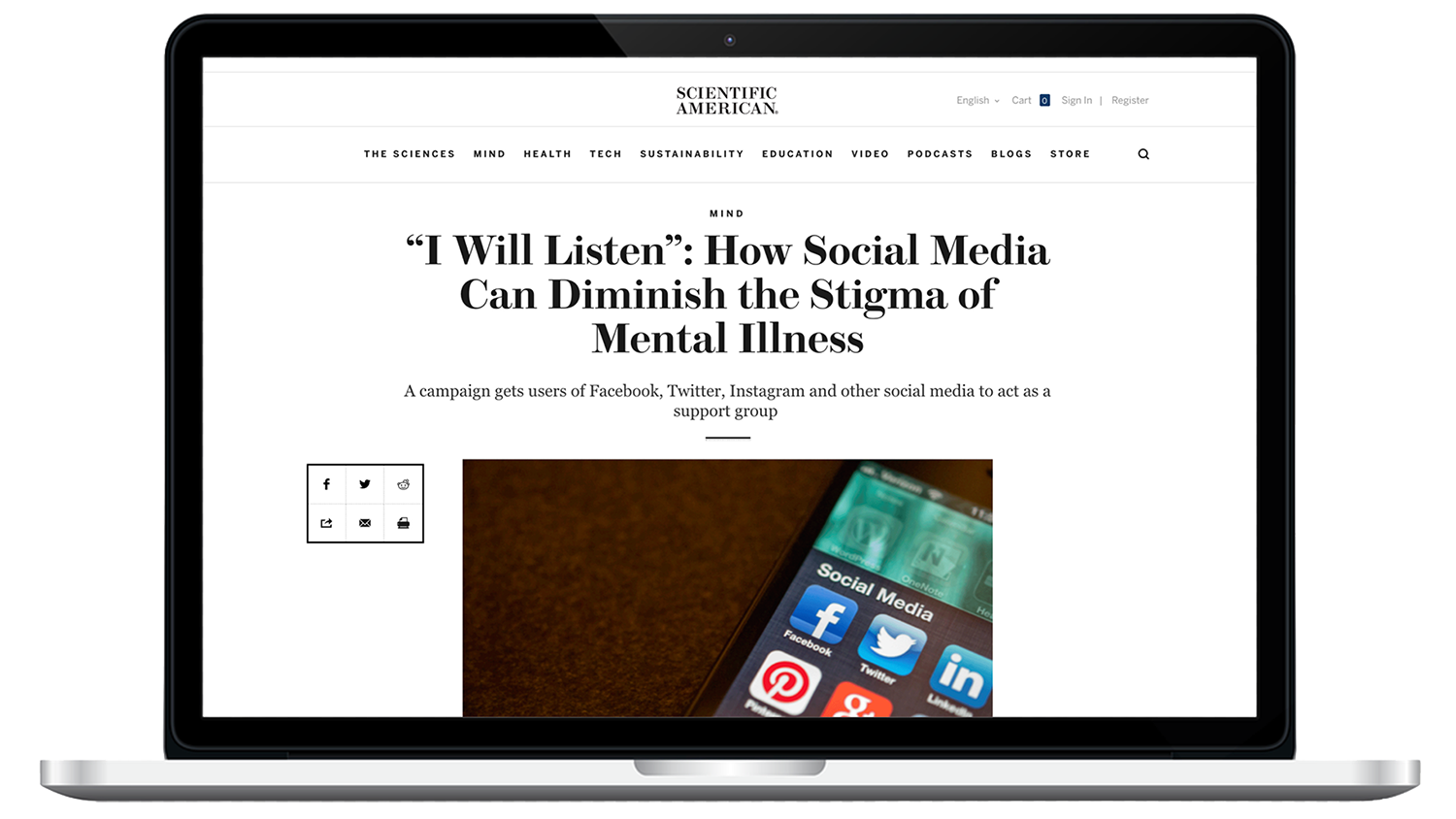
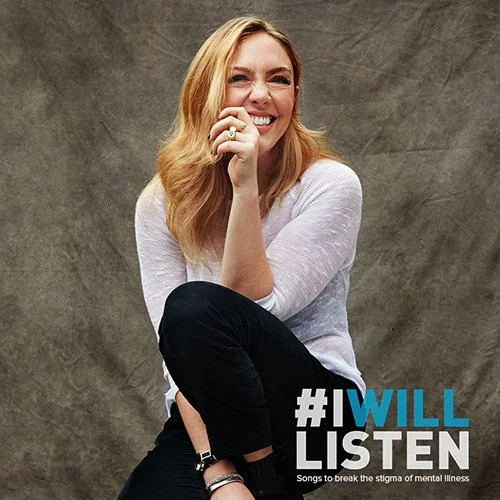
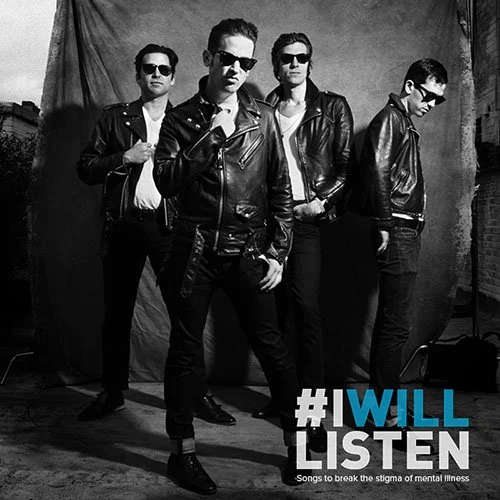
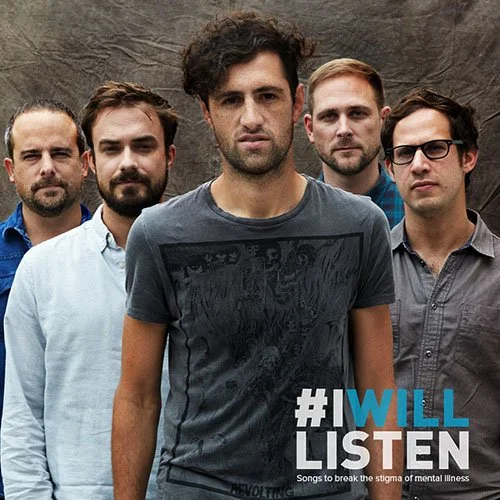
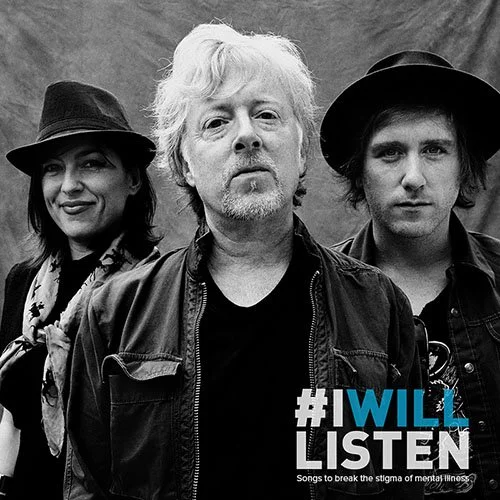
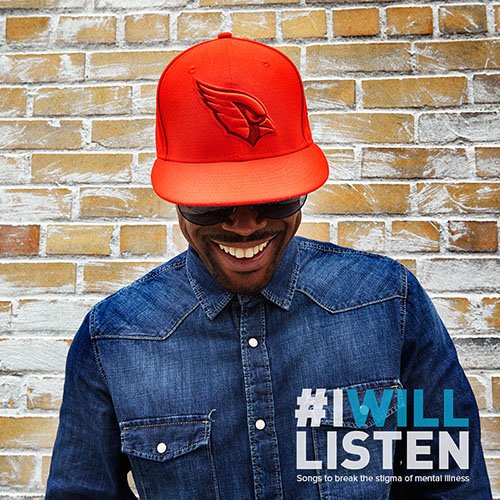
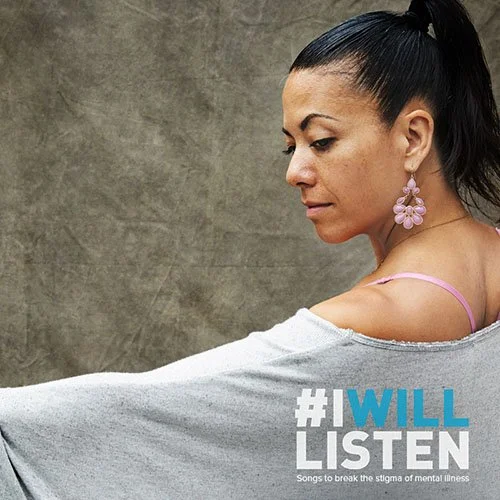
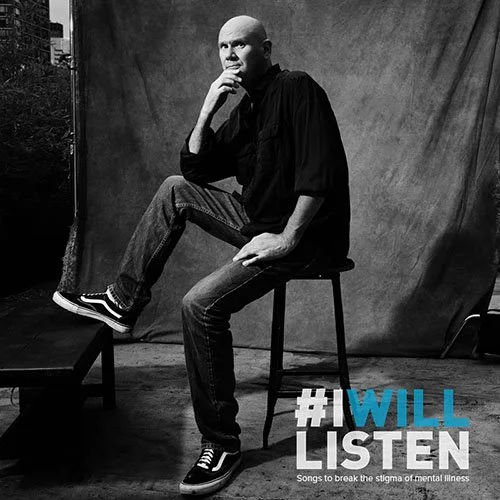
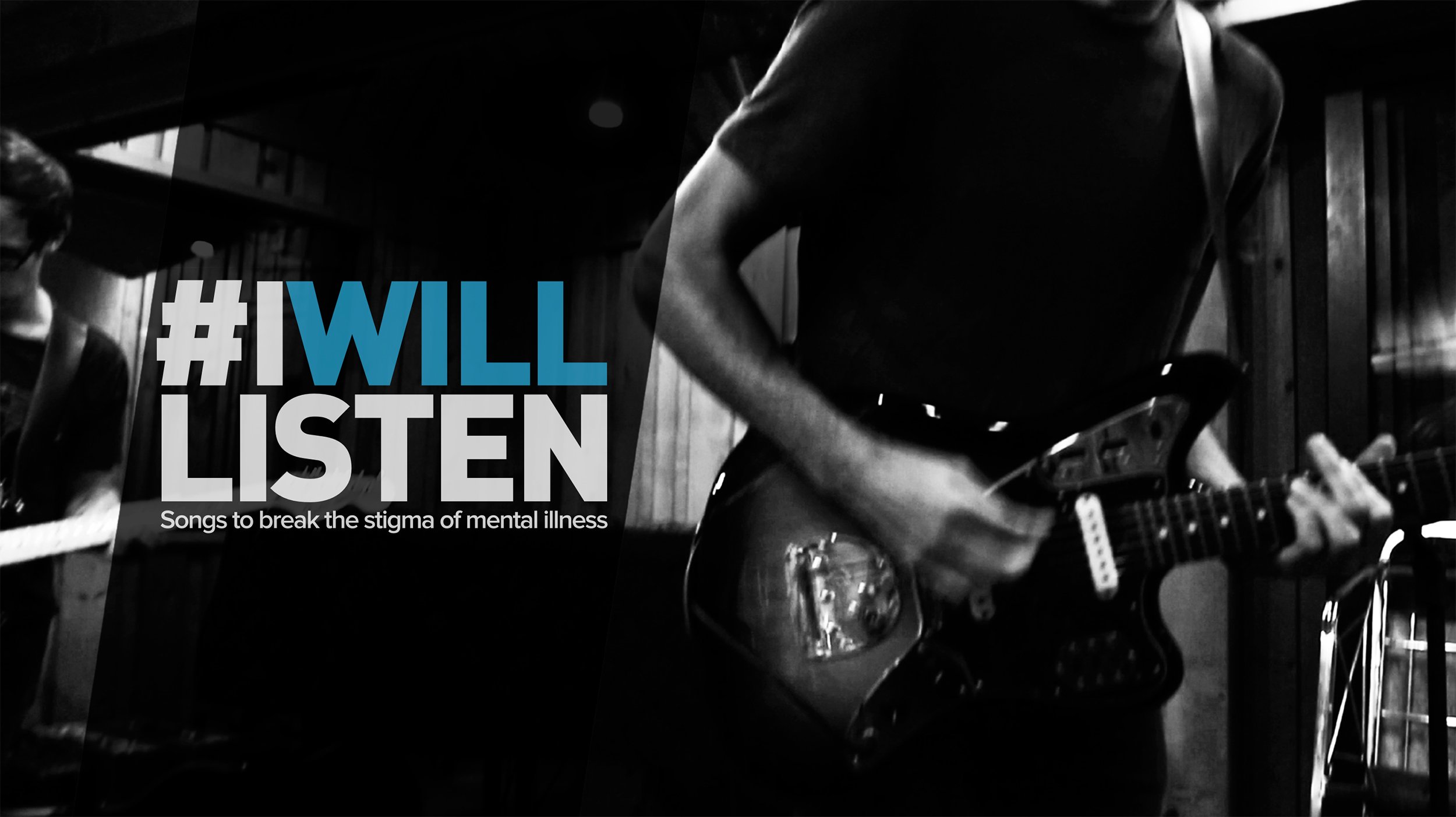
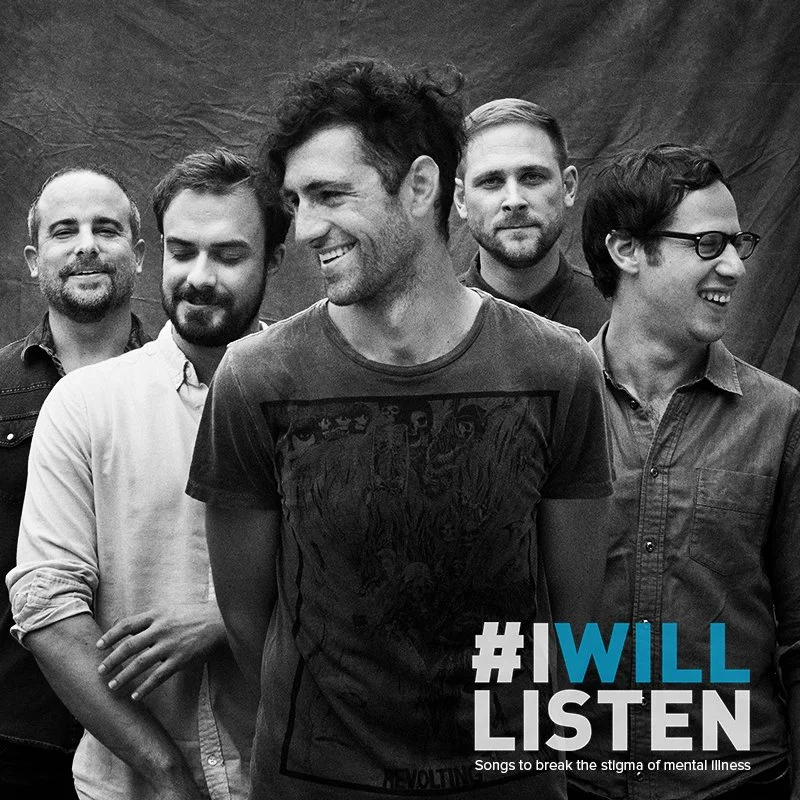
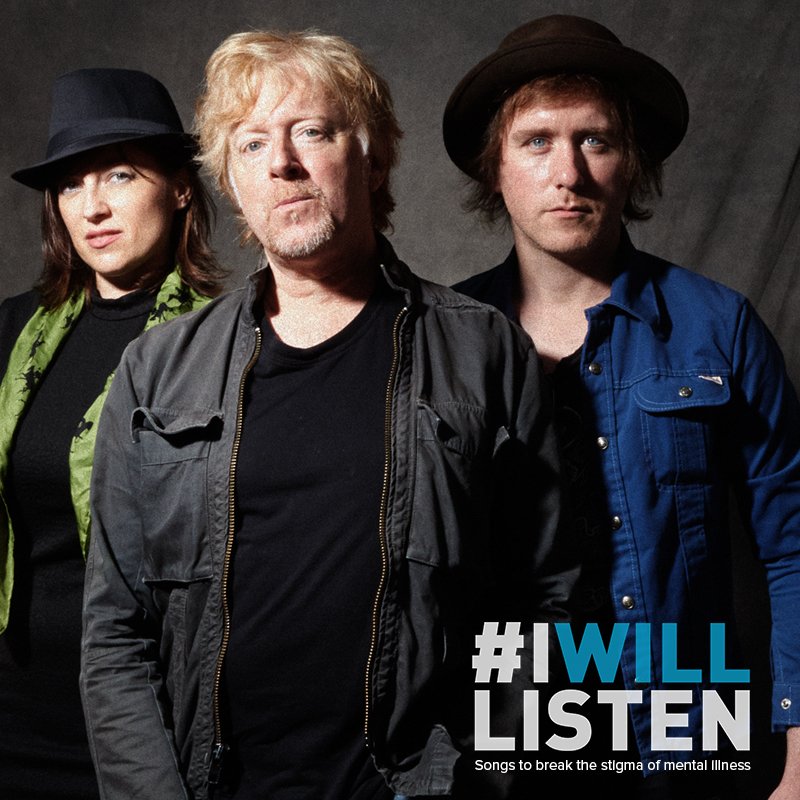
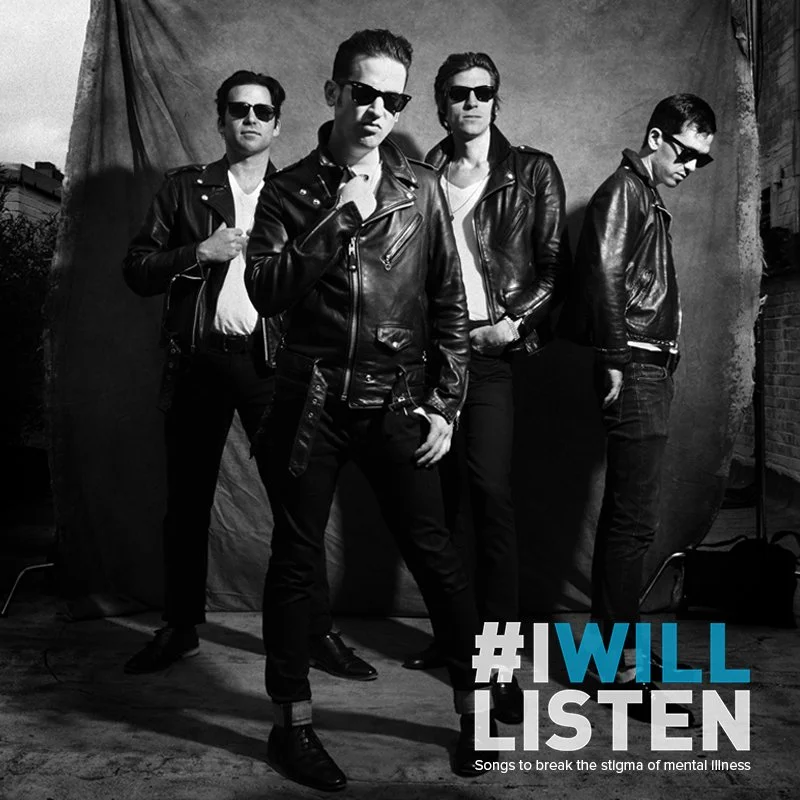
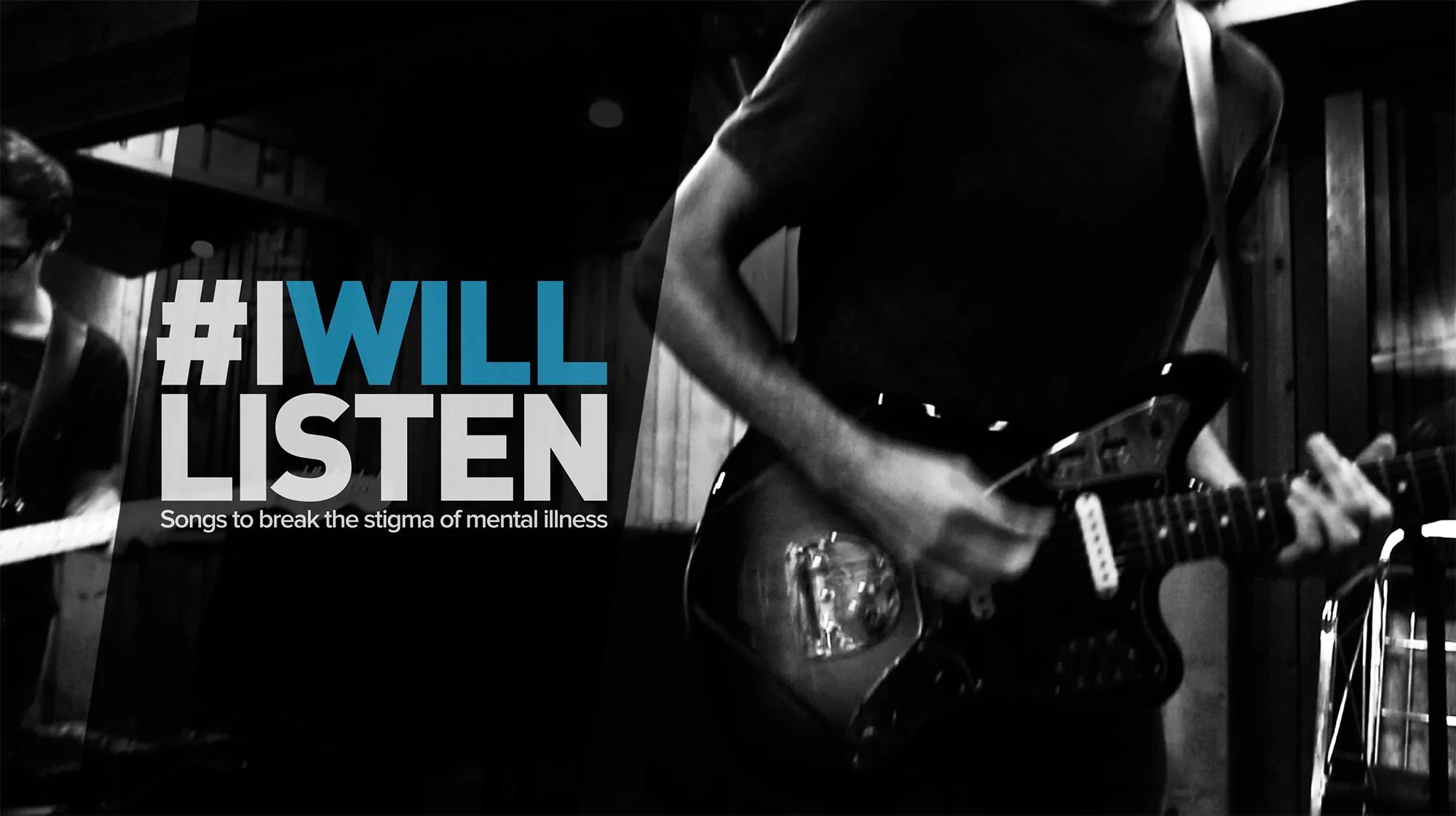
Songs to Break the Stigma of Mental Illness was the first album to address mental health. Music lets us share things that are hard to talk about. And few things are as hard to talk about as mental illness. We invited 5 indie musical artists to write songs about their experience with mental health. And the music did what other forms of communication could never do to break down barriers.
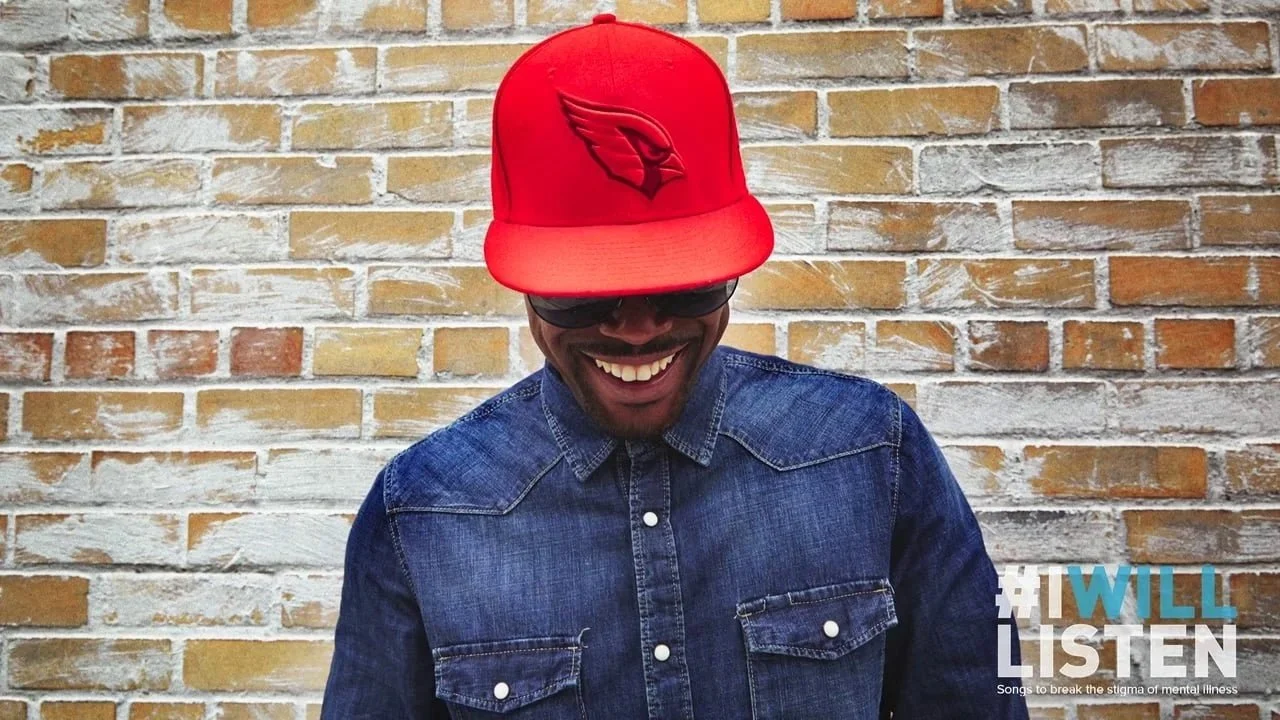
Case Video: Five indie musicians show how music makes it easier to talk about one of the hardest subjects.
The artists shared why this project was important to them, and took us behind-the-scenes at the famous Power Station studios in Manhattan, where Springsteen, the Stones, Bowie, Dylan, and Madonna all recorded.


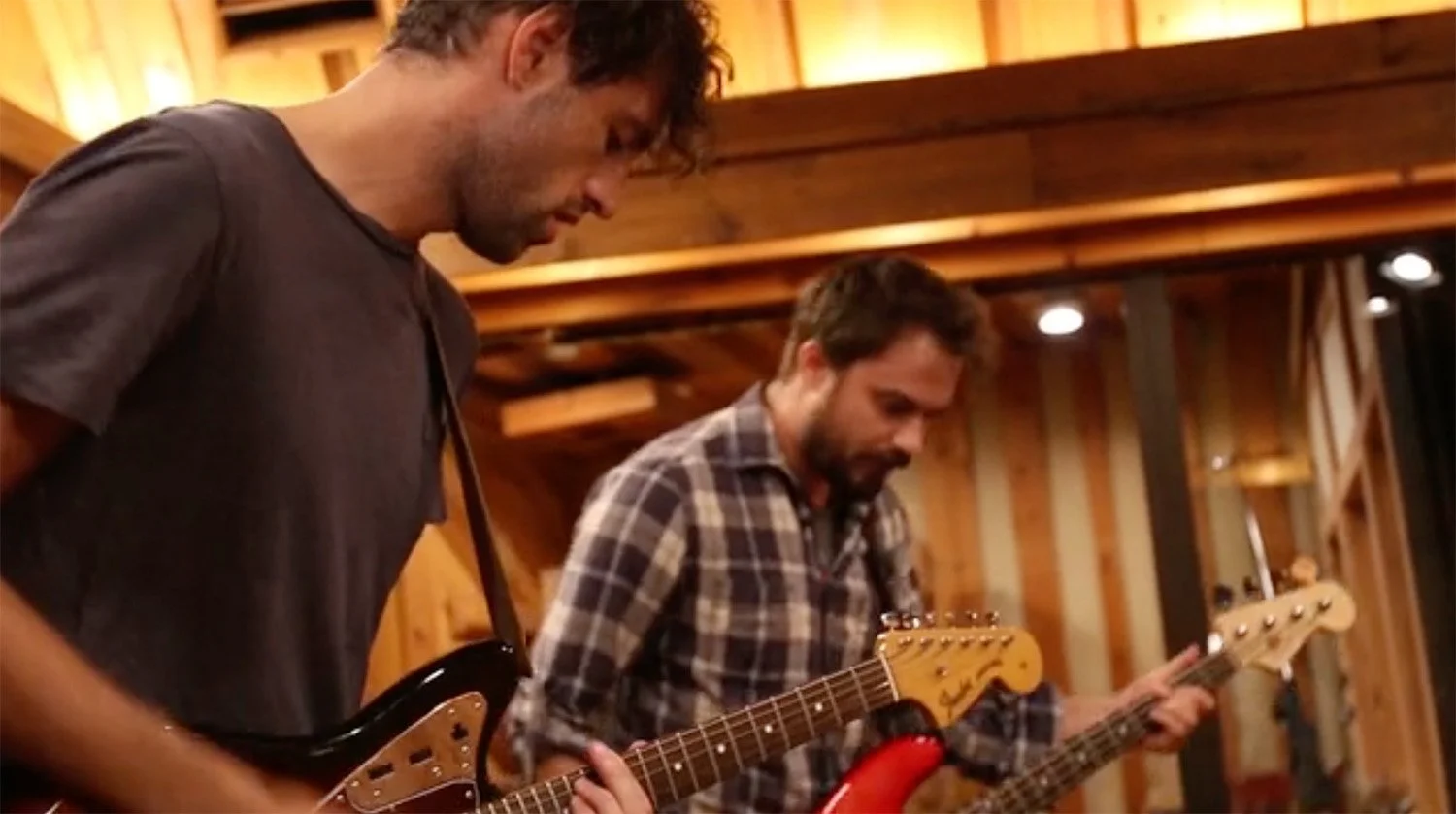
Each song was a personal statement about mental health inspired by the idea that music can say the things we can’t say to each other.
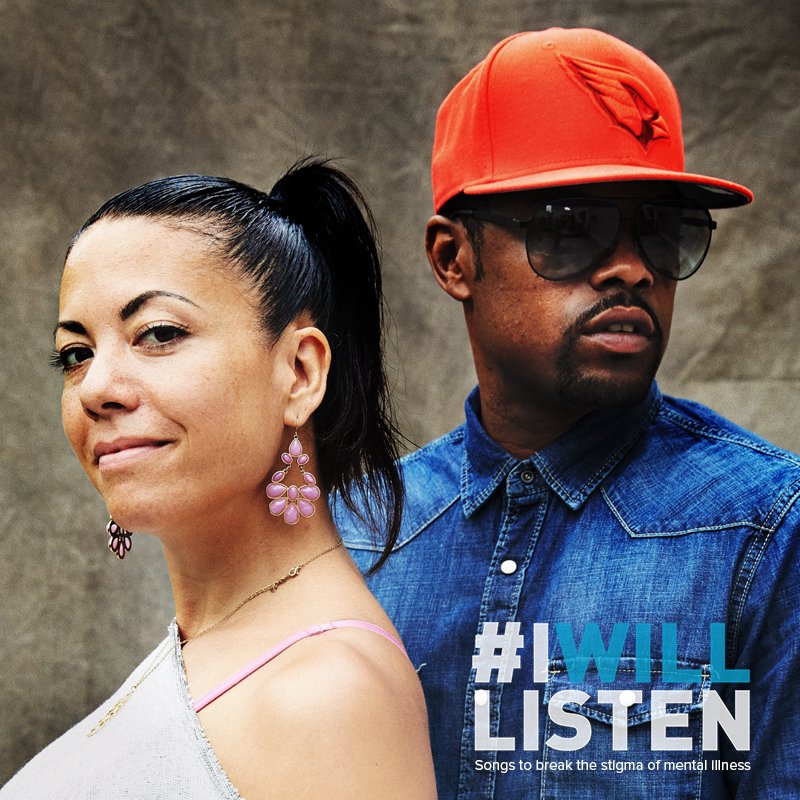
Shadow River Music Video
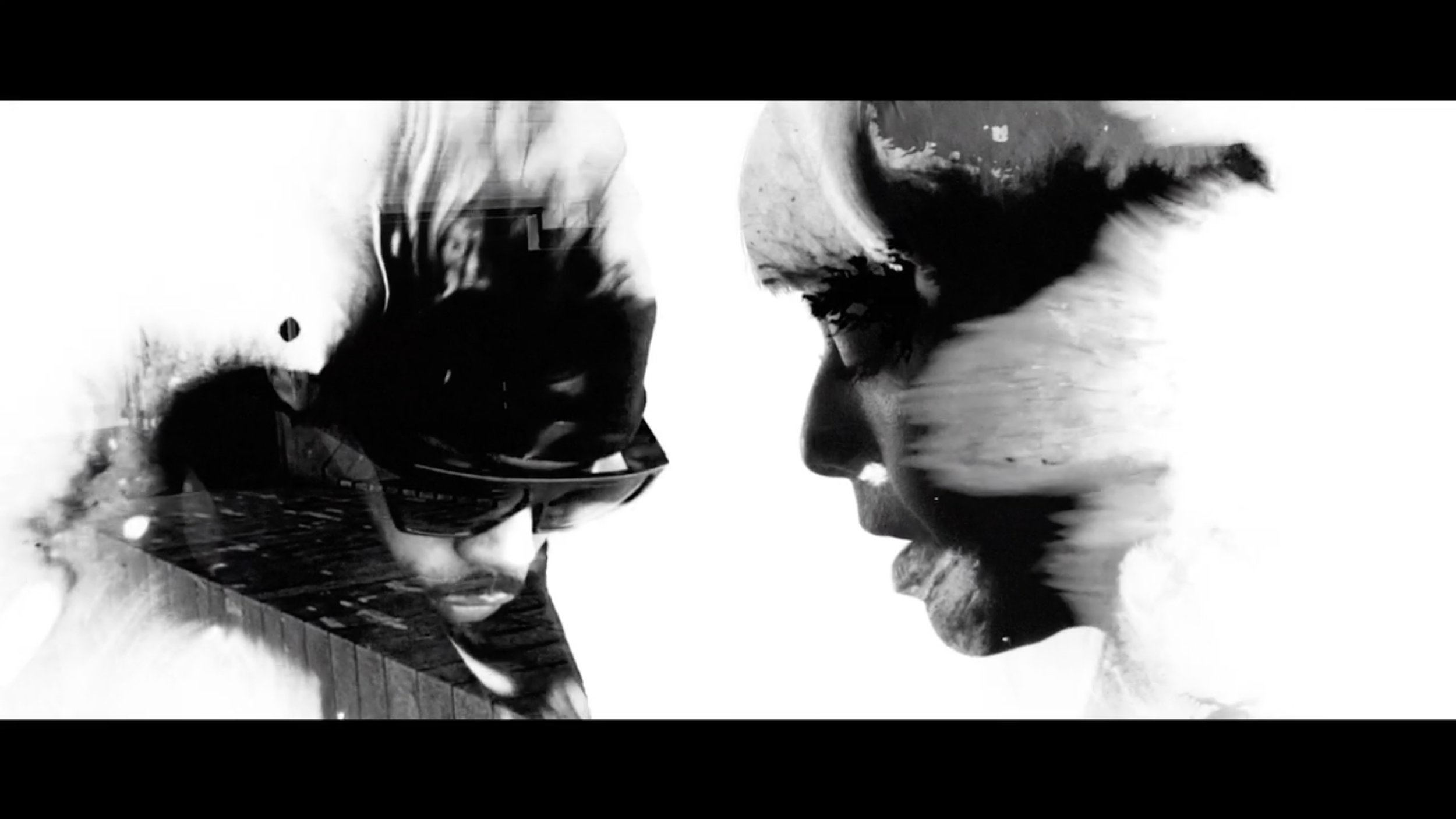
Rap artist Boola, with singer Jeni Fujita and composer Tony Verderosa, created a haunting song about depression. People shared, tagged friends, and linked to it because it expresses the things that are hard to say.
Click play for a video walk through of the album booklet and liner notes.